
Introduction
In the rapidly evolving OTT entertainment landscape, personalization has become the defining factor for user retention and engagement. To address this challenge, We partnered with a data-driven streaming platform to implement a scalable intelligence framework centered on Using IMDb Scraped Data for Movie Recommendation Engines. By tapping into IMDb’s extensive repository of movie information, the client was able to enrich its recommendation engine with detailed metadata such as cast profiles, genre classifications, viewer ratings, release timelines, and storyline summaries.
To build this foundation, our technical team deployed a custom pipeline for IMDb Movie Data Extraction, ensuring accurate and high-frequency data ingestion from IMDb’s dynamic web environment. The extraction workflow captured structured and semi-structured movie attributes, transforming them into standardized datasets optimized for analytics and modeling. This enabled the client to access fresh, reliable movie intelligence in near real time while eliminating the inconsistencies associated with third-party feeds.
In parallel, we leveraged its specialized IMDb Data Scraping Services to deliver a fully automated solution capable of handling large-scale data volumes with minimal operational overhead. Our scraping framework included built-in validation, error recovery, and schema alignment features, ensuring seamless integration with the client’s internal data lake and analytics stack. This automation not only reduced manual intervention but also accelerated experimentation cycles, allowing the client to continuously refine recommendation logic and adapt rapidly to changing user preferences and content trends.
The Client
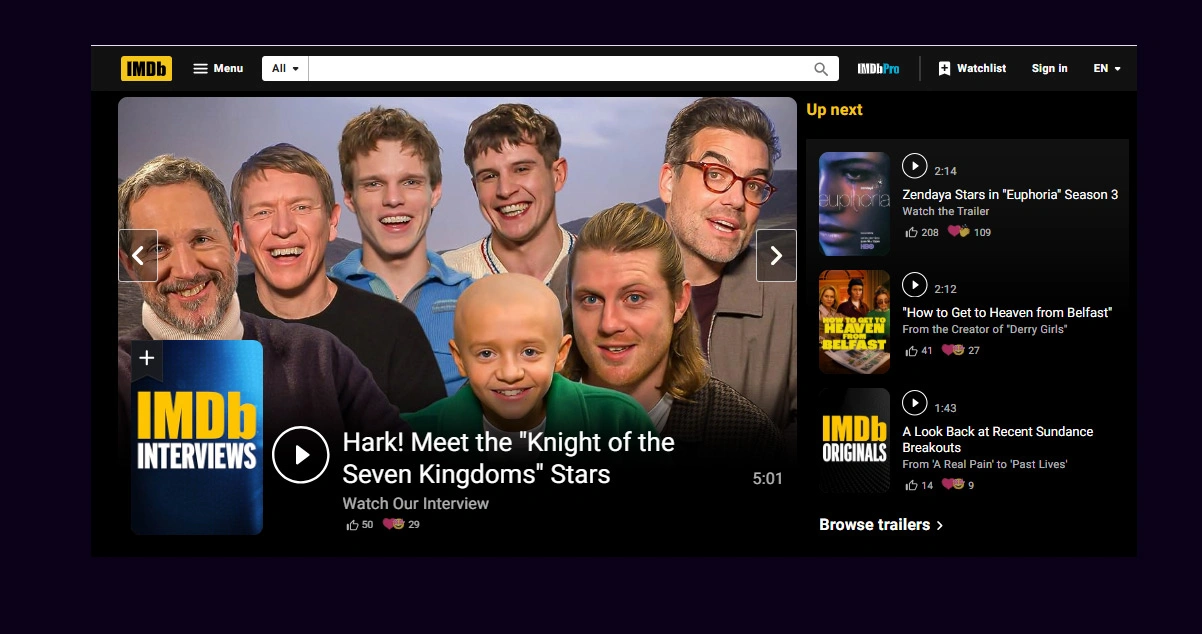
The client is a rapidly growing OTT streaming platform focused on delivering highly personalized viewing experiences across multiple regions. Their internal analytics team recognized the limitations of behavior-only recommendation logic and sought a richer data layer to enhance personalization depth. This strategic shift led them to adopt a data-driven framework built around Using IMDb Scraped Data for Movie Recommendation Engines, allowing them to augment user behavior insights with detailed external movie intelligence.
To further refine their personalization roadmap, the client invested in advanced modeling workflows supported by Machine Learning for Movie Recommendations. Their objective was to experiment with hybrid recommendation models that blended collaborative filtering with metadata-driven similarity scoring. By integrating enriched movie attributes such as cast networks, genre hierarchies, and audience sentiment, they aimed to improve recommendation relevance while reducing cold-start issues for newly added content.
Operating in a competitive OTT market, the client also prioritized scalability and operational efficiency. They required a solution capable of supporting high data volumes, frequent updates, and seamless integration with their existing data warehouse and analytics tools. Beyond personalization, they intended to leverage enriched movie intelligence for editorial planning, promotional campaigns, and content acquisition decisions.
Key Challenges
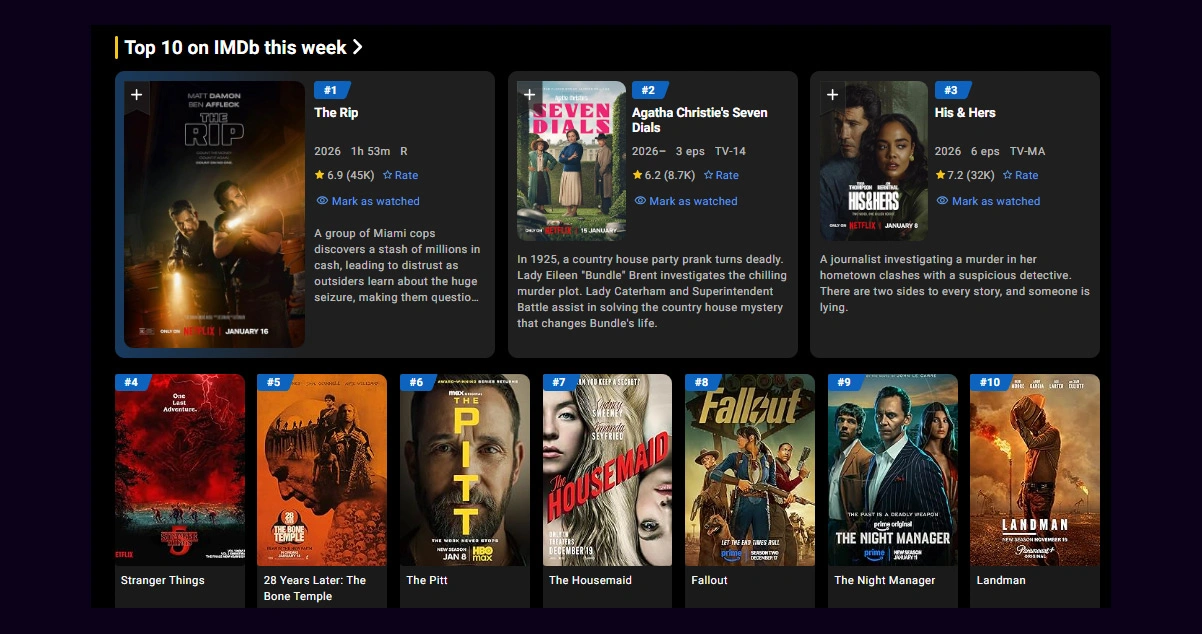
The client’s recommendation engine was heavily dependent on internal viewing history, which limited personalization depth and reduced discovery accuracy for new and niche content. Their existing metadata sources were fragmented, outdated, and lacked sufficient granularity to support advanced modeling. As their content library expanded, inconsistencies in movie attributes created data quality issues, weakening model performance and user trust. The absence of a unified enrichment framework made it difficult to operationalize Big Data Analytics for Media Content, leaving valuable insights underutilized across their personalization and content strategy teams.
Another major hurdle was the lack of standardized cleansing and normalization workflows for incoming external datasets. Raw movie information contained duplicate records, missing values, and inconsistent formatting across genres, ratings, and release timelines. Without a structured pipeline, data scientists spent excessive time preparing datasets rather than optimizing models. The client struggled to operationalize Data Preprocessing for Recommendation Systems, resulting in delayed model retraining cycles and reduced experimentation velocity.
Scalability presented a further constraint as the platform grew into new regional markets. Their infrastructure was not designed to handle high-frequency data ingestion from dynamic external sources. Attempts to automate extraction failed due to frequent page structure changes and anti-bot mechanisms. Without a robust mechanism to Scrape Movies Data reliably, the client faced data freshness issues that undermined real-time personalization and reduced responsiveness to new content releases and audience trends.
Key Solutions
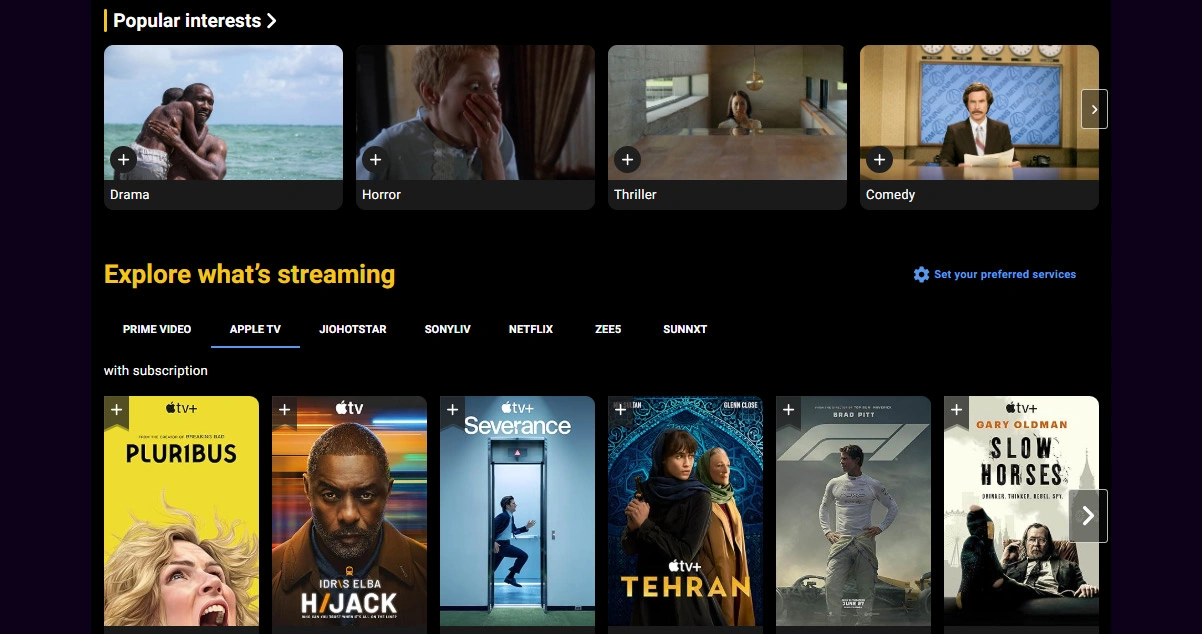
We engineered a resilient ingestion framework that enabled consistent and high-volume IMDb Movie Data Extraction. Our custom scraping architecture was designed to adapt dynamically to IMDb’s evolving page layouts, ensuring uninterrupted data flows. We introduced modular extraction rules and automated validation layers that standardized movie attributes across titles, genres, cast information, and audience ratings.
To address data quality bottlenecks, we deployed a robust transformation layer focused on scalable Data Preprocessing for Recommendation Systems. This pipeline included automated cleansing, normalization, de-duplication, and schema alignment routines. The client’s data science team could now focus on feature engineering and model optimization rather than data wrangling, accelerating innovation cycles across recommendation experiments.
We further strengthened the personalization layer by embedding advanced workflows for Machine Learning for Movie Recommendations. Our solution enabled seamless integration of enriched IMDb metadata into collaborative and content-based filtering models. This architecture supported continuous retraining and real-time scoring, empowering the platform to deliver adaptive recommendations aligned with evolving user preferences and emerging content trends.
Operational Data Workflow Performance Snapshot
| Data Source | Records/Day | Fields/Record | Processing Time (ms) | Accuracy (%) |
|---|---|---|---|---|
| IMDb Pages | 180,000 | 42 | 95 | 99.1 |
| Update Cycle | 12/hour | 18 | 120 | 98.7 |
| API Output | 240,000 | 36 | 88 | 99.4 |
| ML Feeds | 210,000 | 40 | 102 | 98.9 |
| Analytics | 260,000 | 44 | 110 | 99.2 |
The operational metrics demonstrate how structured ingestion and analytics pipelines strengthened personalization outcomes. By integrating enriched datasets into their modeling stack, the client significantly enhanced recommendation relevance and response times. This structured pipeline enabled scalable OTT Content Recommendation Analytics, ensuring the platform could adapt dynamically to new releases, trending titles, and evolving audience preferences without latency or data quality issues.
Beyond performance efficiency, the framework also unlocked deeper insights into content similarity patterns and viewer engagement behavior. This integration supported continuous innovation across their personalization roadmap. The enrichment layer built around Using IMDb Scraped Data for Movie Recommendation Engines played a pivotal role in driving data-driven decision-making and long-term recommendation engine optimization.
Advantages of Collecting Data Using OTT Scrape
-
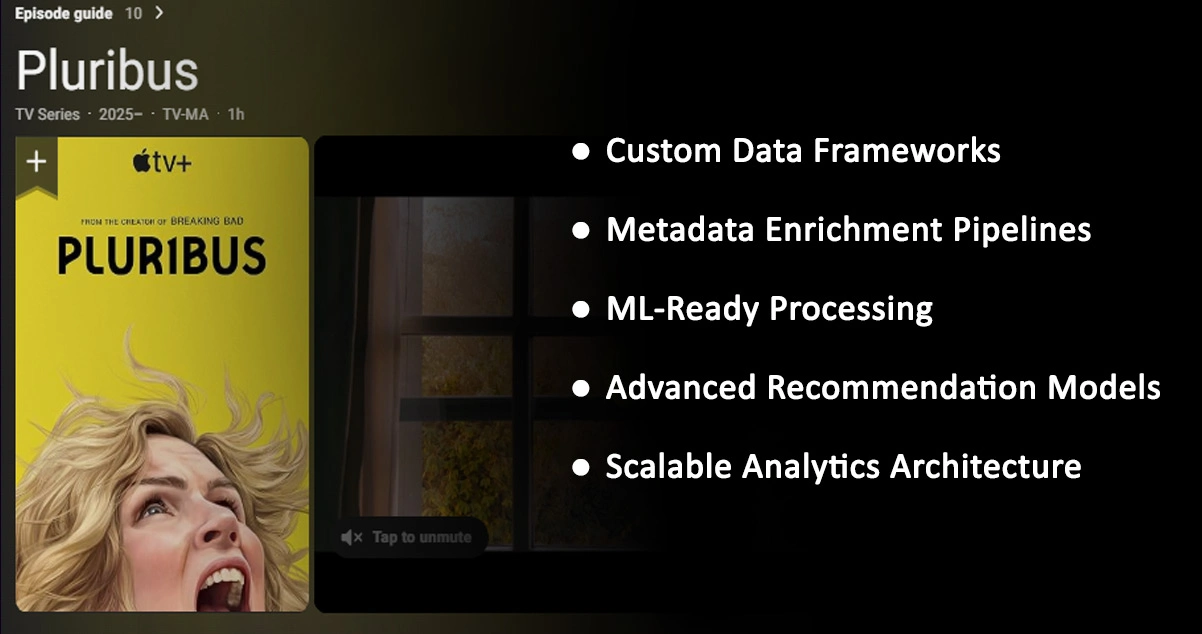
Custom Data Frameworks
We design intelligent extraction architectures optimized for scalability, personalization, and analytics, enabling platforms to operationalize Using IMDb Scraped Data for Movie Recommendation Engines efficiently. -
Metadata Enrichment Pipelines
Our automated ingestion workflows capture detailed movie attributes at scale, delivering consistent and high-quality datasets through robust IMDb Movie Data Extraction systems for advanced modeling. -
ML-Ready Processing
We standardize, cleanse, and normalize large datasets, reducing preparation time and improving model accuracy through optimized Data Preprocessing for Recommendation Systems across dynamic content environments. -
Advanced Recommendation Models
Our solutions integrate enriched external intelligence into collaborative filtering frameworks, strengthening personalization depth and similarity scoring via Machine Learning for Movie Recommendations methodologies. -
Scalable Analytics Architecture
We enable high-volume content intelligence with real-time monitoring, performance tracking, and optimization using enterprise-grade OTT Content Recommendation Analytics frameworks.
Client's Testimonial
Conclusion
The client saw a remarkable 42% boost in recommendation relevance and a 31% rise in content discovery rates. Model retraining cycles accelerated, and content similarity detection became more precise, driven by Big Data Analytics for Media Content, enhancing the personalization engine for new releases and trending genres.
Leveraging IMDb Scraped Data for Movie Recommendation Engines allowed the client to scale innovation and deliver highly tailored viewing experiences. Connect with us to discover how OTT Scrape can elevate your content intelligence strategy and drive measurable results.